
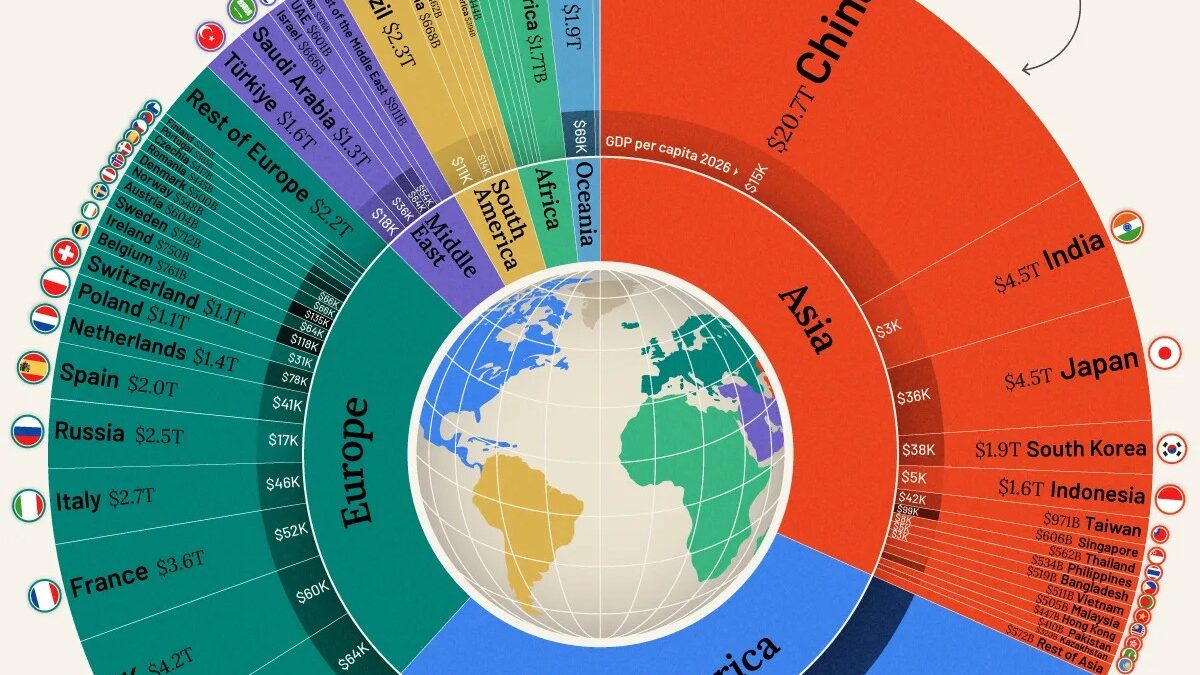
The Bank Indonesia (BI) — in its latest 2025 policy address — delivered a stark warning: the global economic outlook remains dim in 2026, 2027: BI.This is not just BI’s concern: global economic watchers are also adjusting forecasts downward, amid rising protectionism, financial volatility, and policy uncertainty. Below we unpack what’s driving this gloomy outlook, what it means for economies worldwide (especially emerging markets), and how policymakers and businesses might prepare.
Why BI Sees a Dim Global Outlook
1. Rising Protectionism & Trade Fragmentation
BI Governor Perry Warjiyo explicitly cited the continuing tariff measures and protectionist stance of the United States as a key driver of global uncertainty. These policies are causing a decline in world trade, weakening the global flow of goods, and undermining the multilateral trade architecture — pushing countries toward bilateral or regional deals instead.
2. Sluggish Growth in Major Economies
Growth prospects are dimming especially in large economies like the US and China, dragging down aggregate global demand. Even more optimistic scenarios see global growth teetering around ~3% annually — a far cry from pre-pandemic potential.
3. Elevated Debt & Interest Rate Pressures
Developed economies are grappling with high government debt and elevated interest rates — consequences of expansive fiscal policies and responses to inflation. These pressures ripple through global markets: emerging markets might face capital flight, currency depreciation, and constrained investment if central banks tighten further.
4. Financial System Vulnerabilities
BI pointed to the heightened risks in global financial markets. Complex derivative products — hedge funds, algorithm-driven trading — have amplified volatility. For emerging markets especially, this means exposure to sudden capital outflows and exchange‑rate shocks.
5. Disruptive Innovation Without Regulatory Clarity
The rise of cryptocurrencies, stablecoins, and other private‑sector digital financial tools adds another layer of uncertainty. According to BI, lack of clear regulation and supervision may threaten financial stability in many economies.
Implications: What a Dim Global Outlook Means for Countries
| Area | Potential Impact |
| Trade & Exports | Demand decline from major economies may hit export‑dependent countries; trade volumes likely to shrink. |
| Foreign Investment & Capital Flows | Emerging markets face risk of capital flight, currency depreciation, and higher borrowing costs. |
| Inflation & Interest Rates | Inflation may remain sticky; central banks may face the trade-off between taming inflation and fostering growth. |
| Employment & Growth in Emerging Economies | Slower global growth may dampen growth in emerging economies, hurting job creation and income growth. |
| Financial System Stability | Volatility in global finance could trigger currency crises, debt stress, or capital outflows in vulnerable economies. |
For many emerging economies, including countries in Asia, Latin America, and Africa, the combination of trade headwinds, weak external demand, volatile financial flows, and internal structural shortcomings could significantly slow down growth trajectories.
The Counterpoint: Why Not All Hope Is Lost
Even as global prospects dim, some economies — particularly those with sound macro‑economic policies or strong domestic demand — may weather the storm relatively well. For instance:
- Some countries continue to see resilient growth due to fiscal stimuli, structural reforms, or robust domestic demand. As noted by other institutions like the World Bank, with the right reforms and policy discipline, growth around 4.5–5.5% remains possible despite global headwinds.
- Domestic‑oriented investments (e.g., infrastructure, housing, technology) can reduce dependence on volatile global demand.
- Policy mix — including monetary stability, macroprudential regulation, and supportive fiscal measures — can strengthen resilience to external shocks.
Still, these are not guaranteed buffers — they require strong governance, fiscal restraint, and proactive reforms.
How Businesses & Policymakers Should Respond
- Diversify export markets and supply chains. Don’t rely heavily on a single market; explore regional trade, strategic partners, and new trade agreements.
- Strengthen domestic demand and consumption. Encourage policies that raise household income, support SMEs, and promote domestic investment.
- Support structural reforms. Invest in productivity, infrastructure, digital transformation, and regulatory frameworks to improve resilience.
- Prudent financial regulation. Monitor capital flows, manage foreign‑exchange risk, and ensure financial stability, especially if relying on foreign debt or investment.
- Policy flexibility and coordination. Central banks and fiscal authorities must coordinate to balance inflation control, growth support, and exchange‑rate stability.
FAQs
Q: Why does BI call the outlook “dim” for 2026–2027?
A: BI bases this on rising global uncertainty — especially due to protectionist trade policies, slowing growth in major economies, high global debt and interest rates, financial market volatility, and lack of clarity on regulation of new financial innovations like cryptocurrencies.
Q: Does this mean global recession is certain in 2026 or 2027?
A: Not necessarily. “Dim” does not equal “recession.” It refers to a slowdown and increased risk. Some economies may still grow modestly, especially if they maintain strong domestic demand and policy discipline.
Q: Which economies are likely to be hardest hit?
A: Export‑dependent, debt‑heavy, or financially vulnerable economies — especially those reliant on capital inflows or global trade — are most at risk. Emerging markets often fall under such risk, though careful domestic management can mitigate impacts.
Q: What can countries do to protect themselves against global headwinds?
A: Diversify trade, stimulate domestic demand, implement structural reforms (in infrastructure, productivity, regulation), maintain fiscal and monetary discipline, and monitor financial flows and risks.
Q: Are there any positive signals despite the bleak outlook?
A: Yes. Countries with strong domestic consumption, prudent macroeconomic policies, and reforms can still achieve moderate growth. Opportunities also exist in sectors less tied to global demand — like local services, digital economy, infrastructure, and domestic‑oriented industries.
Conclusion
The statement “Global economic outlook remains dim in 2026, 2027: BI” captures an important warning — one echoed by other global institutions facing a deteriorating outlook due to trade friction, financial vulnerability, and policy uncertainty.
Yet, while global headwinds are real, the outcome isn’t predetermined. For economies — particularly emerging ones — resilience will hinge on smart policy, structural reforms, and internal dynamism. Countries that focus on domestic demand, diversify trade and finance, and adopt prudent economic and fiscal policies may still navigate the turbulence and emerge stronger.
For businesses, investors, and policymakers alike, now is the time to reassess risks, explore alternative growth paths, and build buffers. The global storm may be brewing — but with foresight and resilience, it need not turn into a crisis.
